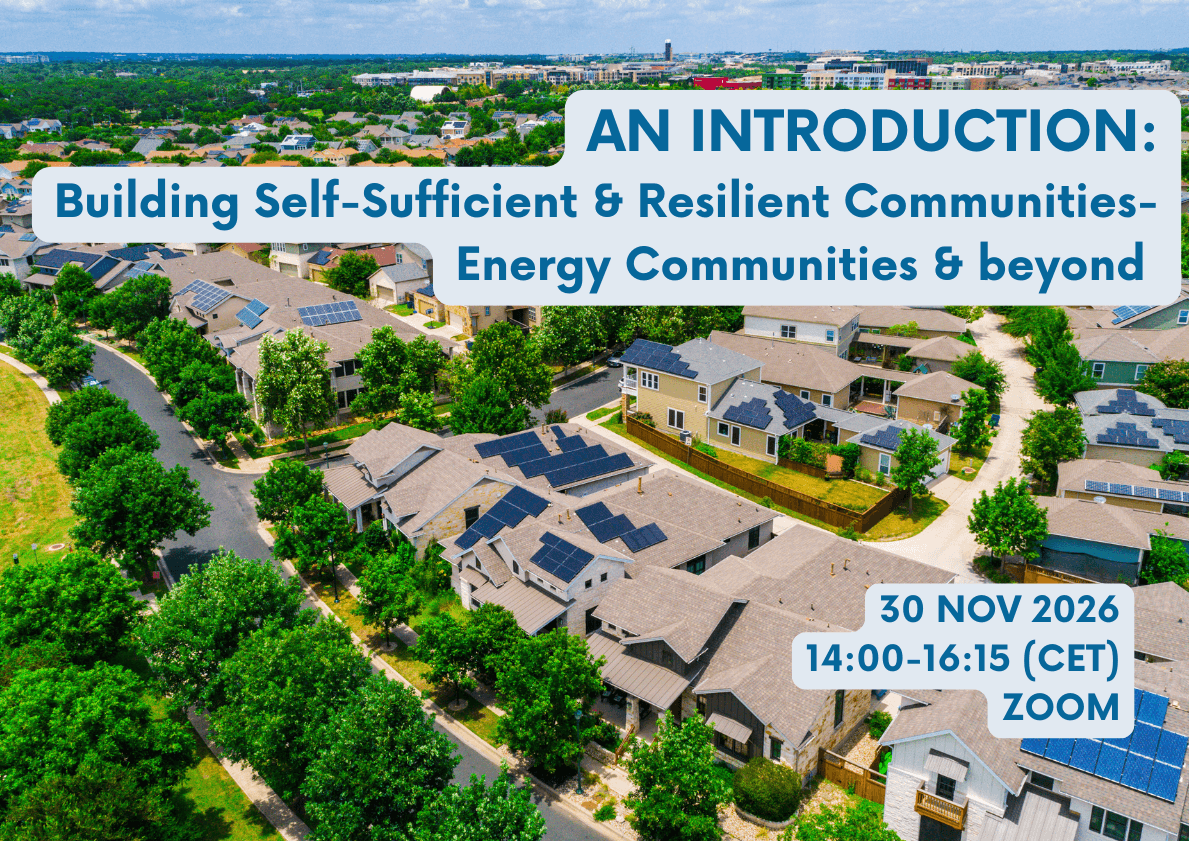
SURE Energy strand Introductory event- online
Zoom · 30 Nov 2026
Following our previous SURE events exploring sustainable living, housing and food, we are excited to turn our attention to another key element of resilient rural communities: renewable energy and local energy self-sufficiency!
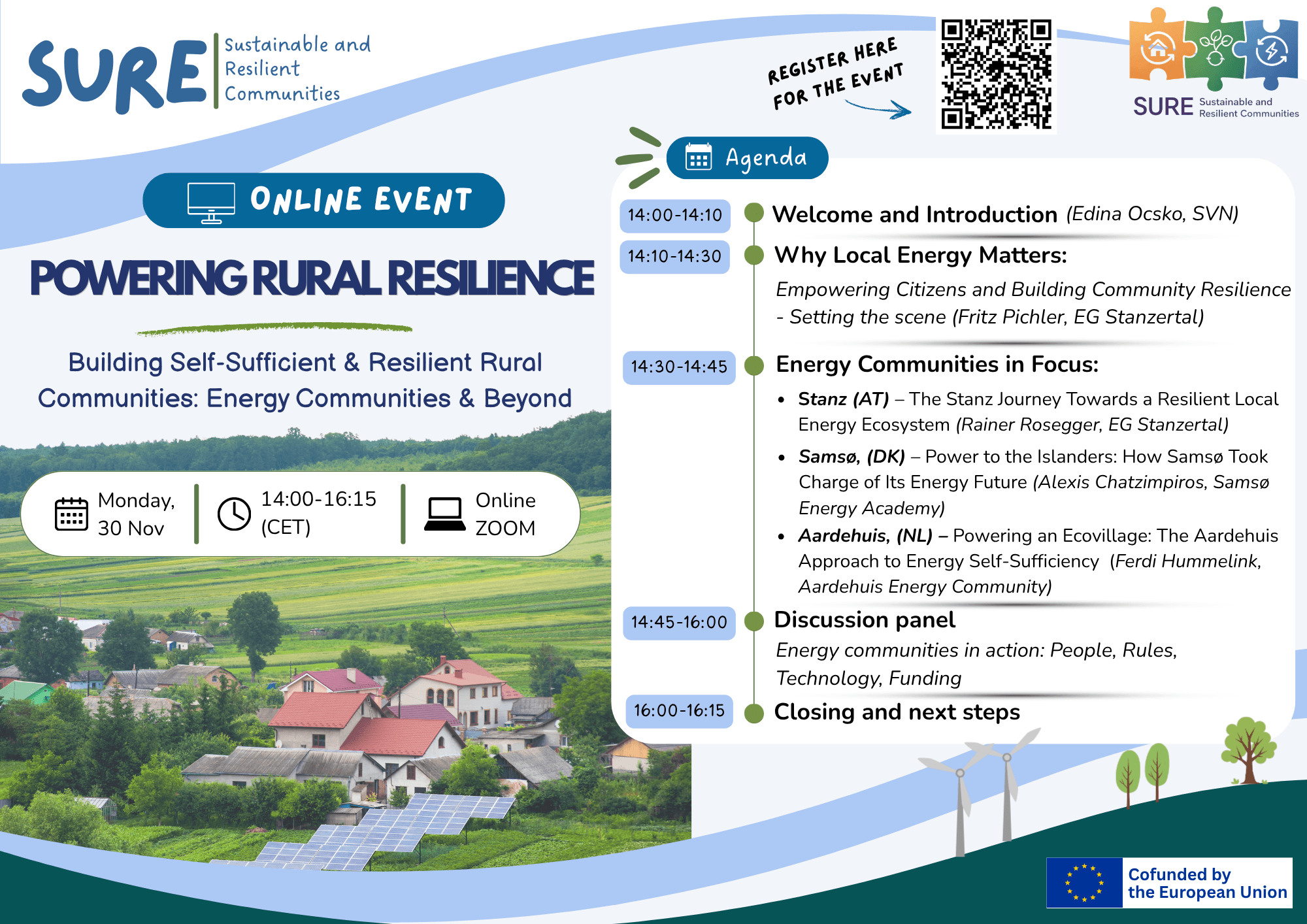
Discover how rural communities across Europe are building more resilient and self-sufficient energy systems! Join the SURE online event on 30 November 2026 to explore inspiring examples from Austria, Denmark and the Netherlands, and take part in an interactive discussion on the opportunities and challenges of community-led renewable energy solutions.
Building Self-Sufficient & Resilient Communities- Energy Communities & beyond
📅 14:00–16:15 CET | Online SURE Workshop
Our interactive workshop explores how rural communities across Europe can take greater control over their energy future through renewable energy communities, local cooperation and practical solutions
🕒 Agenda:
30 November 2026 | 14:00–16:15 CET | Online (Zoom)
14:00–14:10 | Welcome and Introduction Edina Ocsko, SVN
14:10–14:30 | Why Local Energy Matters: Empowering Citizens and Building Community Resilience Setting the scene – Fritz Pichler, EG Stanzertal
14:30–14:45 | Energy Communities in Focus
- Stanz (Austria) – The Stanz Journey Towards a Resilient Local Energy Ecosystem Rainer Rosegger, EG Stanzertal
- Samsø (Denmark) – Power to the Islanders: How Samsø Took Charge of Its Energy Future Alexis Chatzimpiros, Samsø Energy Academy
- Aardehuis (The Netherlands) – Powering an Ecovillage: The Aardehuis Approach to Energy Self-Sufficiency Ferdi Hummelink, Aardehuis Energy Community
14:45–16:00 | Discussion Panel Energy Communities in Action: People, Rules, Technology, Funding
16:00–16:15 | Closing and Next Steps
Event Gallery

Funded by the European Union. Views and opinions expressed are however those of the author(s) only and do not necessarily reflect those of the European Union or the European Education and Culture Executive Agency (EACEA). Neither the European Union nor the granting authority can be held responsible for them.